Did you know that the retail sector is the #1 employment sector in the U.S., with 52 million jobs tied to it? That’s right – retail isn’t just about shopping; it’s a cornerstone of the American economy.
In today’s rapidly evolving marketplace, understanding the retail landscape is crucial for businesses and consumers alike. From the rise of e-commerce to the resilience of brick-and-mortar stores, the retail industry is undergoing significant transformations.
This article delves into the latest retail statistics, exploring trends in online and offline shopping, consumer preferences, and the future of retail. Whether you’re a business owner, marketer, or curious shopper, these insights will help you navigate the changing world of retail in 2024 and beyond.
Key Stats:
- As of 2024, e-commerce constitutes approximately 15% of total retail sales in the U.S., while physical stores still account for 85% of sales.
- There were 1,045,422 brick-and-mortar retail establishments across the U.S. as of 2023.
- The U.S. retail annual growth rate increased from 5.63% to 19.38% from 2010 to 2021.
- 73% of consumers prefer brands with personalized shopping experiences.
- U.S. retail sales reached over $5.1 trillion in 2023, an increase of about 15% from 2021.
- Total global retail sales are valued at approximately $30 trillion as of 2024.
- Walmart remains the largest U.S. retailer by sales, making over $460 billion in the U.S. alone in 2023.
- Dollar General is still the largest retailer in the U.S. by store count, with over 18,000 stores as of 2024.
- Physical stores are expected to account for 70% of all U.S. retail sales by 2025.
- 96% of consumers have returned to shopping at physical stores as of 2024.
- 90% of Gen Z shoppers prefer online shopping, the highest of any generation.
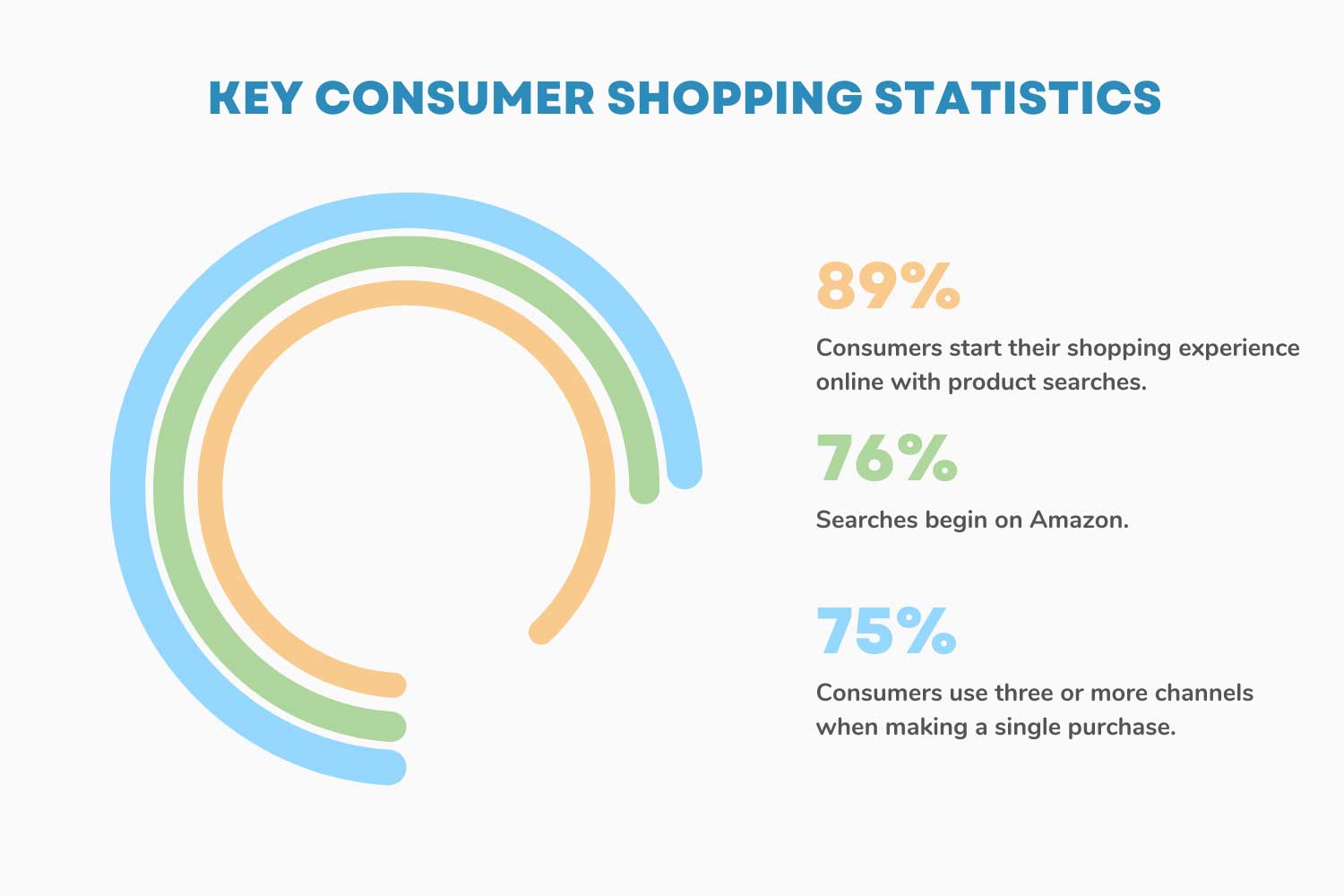
- 89% of U.S. consumers now start their shopping experience online with product searches.
- 75% of consumers use three channels or more when making a single purchase.
- U.S. e-commerce revenue grew by 15% from 2022 to 2023, reaching approximately $1 trillion.
- There are now an estimated 8 million online retailers operating globally, with 2 million in the U.S.
GENERAL RETAIL STATISTICS
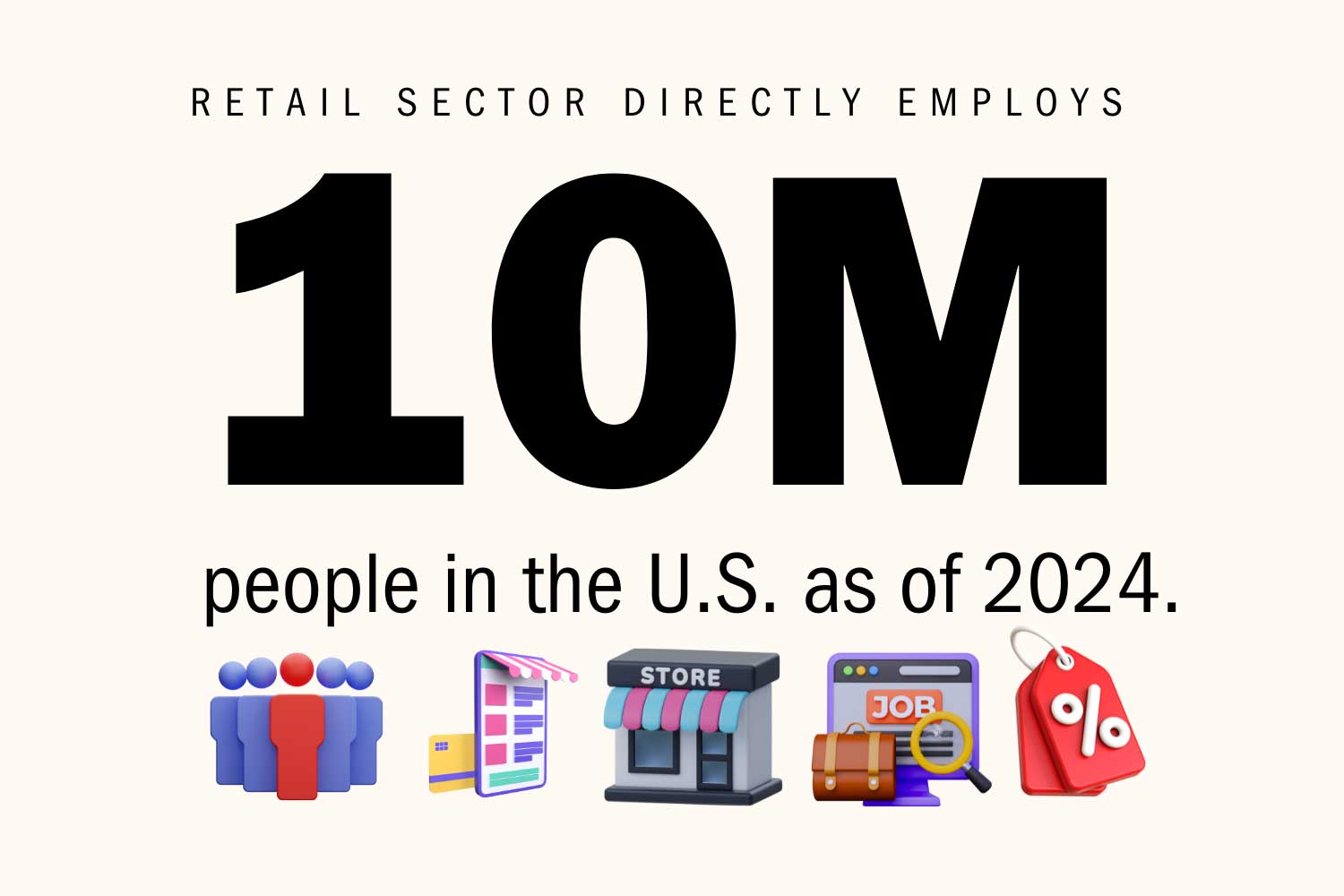
1. The retail sector directly employs over 10 million people in the U.S. as of 2024
As the largest private-sector employer, retail provides more jobs than education (7.5 million), local government (5.8 million), and healthcare sectors (5 million) combined. This vast workforce demonstrates the industry’s critical importance to the national job market and overall economic health.
2. Over 1,050,000 brick-and-mortar retail stores across the U.S. as of 2023
Despite the rise of e-commerce and challenges like the COVID-19 pandemic, physical retail locations continue to grow.
This slight increase in brick-and-mortar establishments indicates the ongoing consumer demand for in-person shopping experiences and the resilience of traditional retail formats in the face of digital competition.
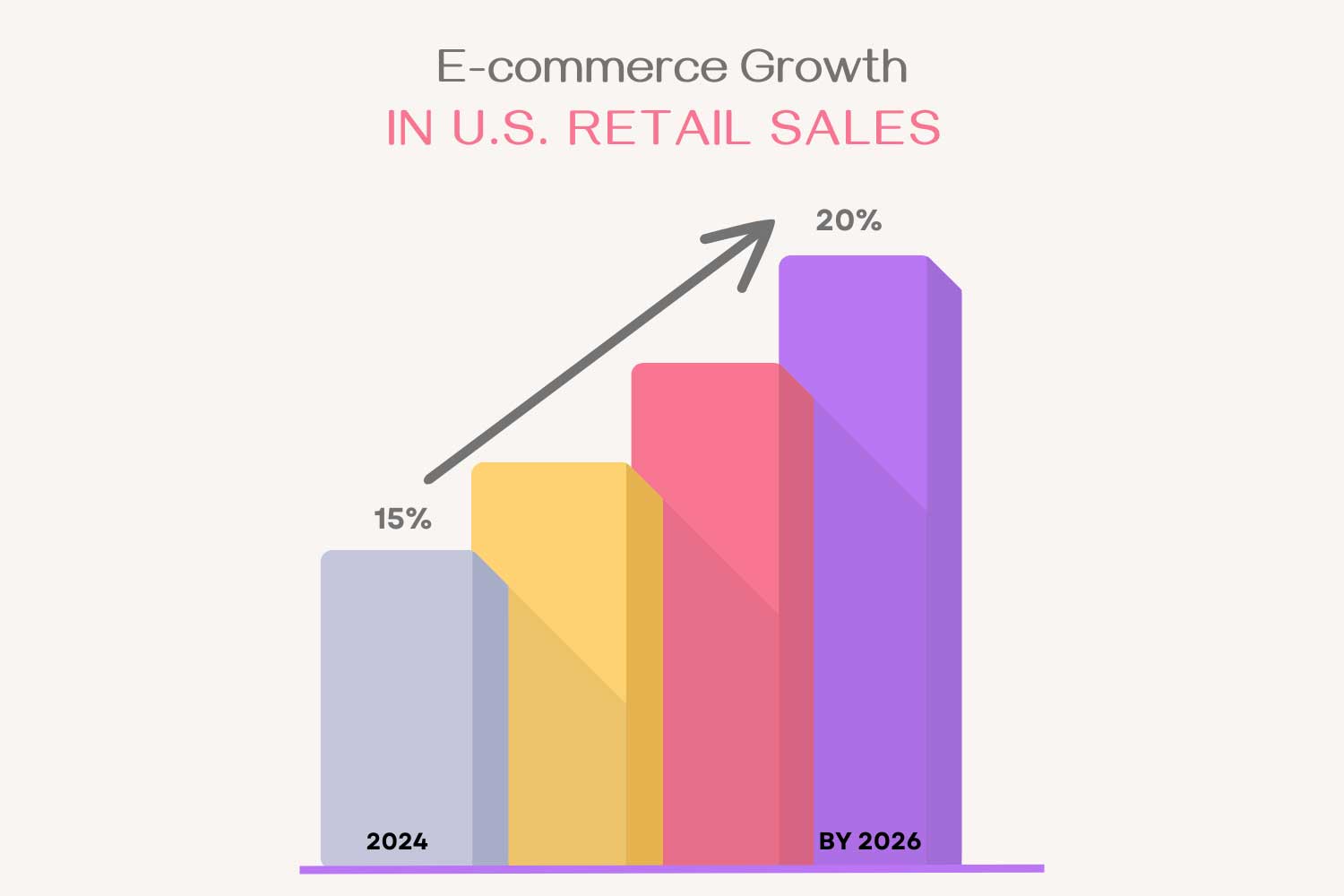
3. E-commerce constitutes 15% of total retail sales in the U.S. as of 2024
While physical stores still dominate, e-commerce is gaining significant ground. The projection that it could reach 20% by 2026 suggests a continued shift in consumer behavior towards digital platforms.
This trend is reshaping the retail landscape, pushing businesses to adapt their strategies to meet changing customer preferences.
4. 78% of U.S. small business retailers now have a website
This represents a notable increase from 71% in 2022, highlighting the growing digital adoption among small retailers.
The rise in website ownership indicates that smaller businesses are increasingly recognizing the importance of an online presence to remain competitive in today’s market. This shift is likely driven by changing consumer habits and the need to reach customers through multiple channels.
5. Walmart remains the largest U.S. retailer, making $643 billion in U.S. sales in 2024
Walmart’s massive sales figure underscores its continued dominance in the retail sector. As the largest U.S. retailer, Walmart’s success demonstrates the enduring power of traditional retail models when combined with strategic adaptation to changing market conditions.
The fact that Amazon, primarily an e-commerce platform, is the second-largest retailer with over $620 billion in U.S. sales, further illustrates the evolving nature of the retail landscape and the growing importance of online retail.

RETAIL STATISTICS BY BRICK-AND-MORTAR STORES
6. Dollar General remains the largest retailer in the U.S. by store count, with over 18,000 stores as of 2024
This highlights the dominance of Dollar General in terms of physical presence across the United States.
The company’s vast network of stores underscores the continued importance of brick-and-mortar retail, especially in the discount store segment. The top three retailers by store count are:
| Retailer | Number Of Stores | 2024 U.S. Retail Sales (In Billions) |
|---|---|---|
| Dollar General | 18,100+ | $37.5 |
| Dollar Tree | 16,000+ | $28.3 |
| CVS | 9,900+ | $95.0 |
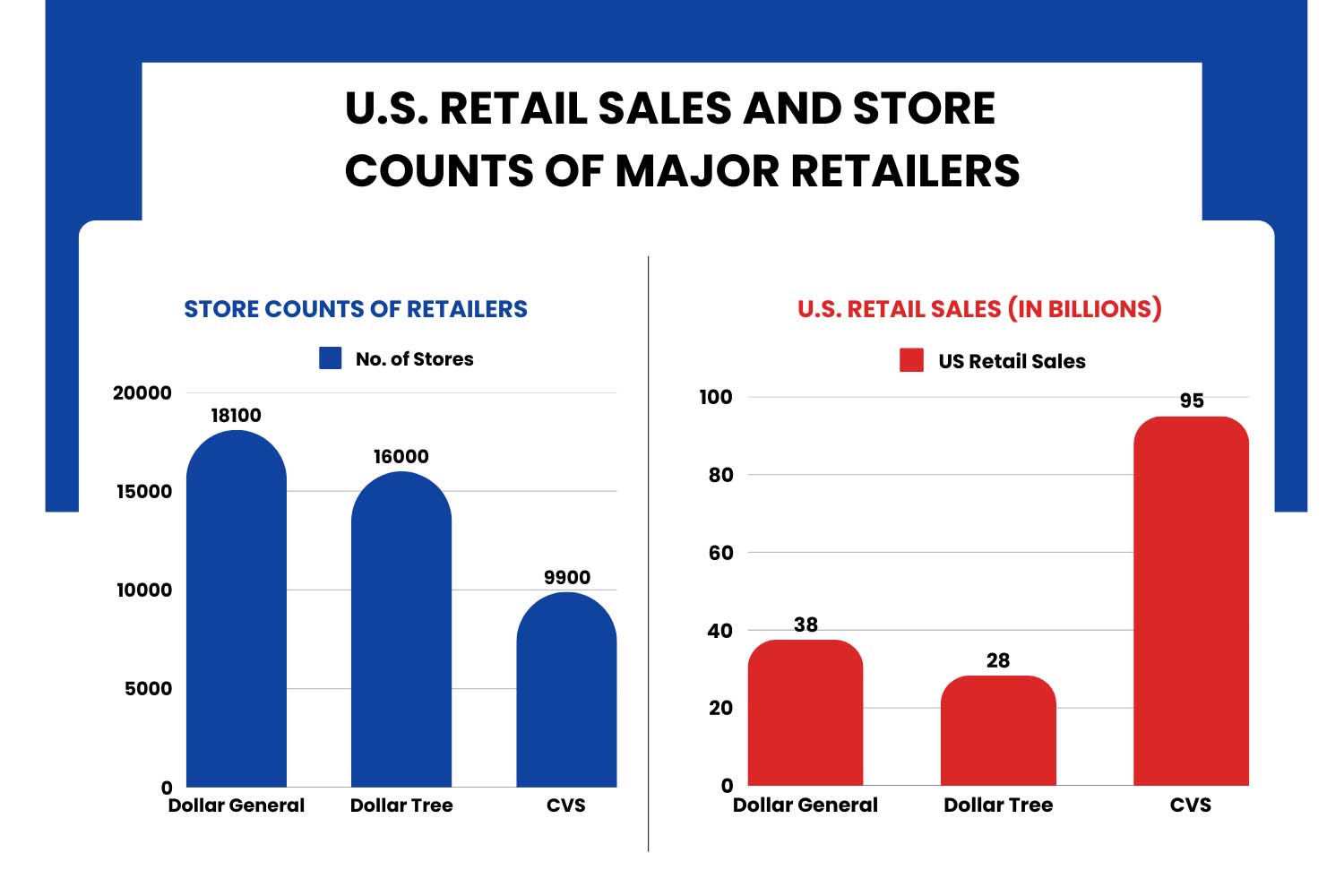
This comparison illustrates that having the most stores doesn’t necessarily correlate with the highest sales, as CVS generates significantly more revenue with fewer locations.
7. 76% of people still prefer to go to a physical store for holiday shopping
This preference has remained relatively stable since 2022, indicating that despite the growth of e-commerce, in-person shopping experiences continue to be valued, especially during the holiday season.
This suggests that physical stores still offer unique advantages, such as immediate product access and the ability to see and touch items before purchase.
8. Physical stores are still expected to account for 70% of all U.S. retail sales by 2025
While the share of brick-and-mortar sales is declining, this projection demonstrates that traditional retail will continue to play a significant role in the overall retail landscape.
The 70% figure indicates that despite the growth of e-commerce, the majority of consumer spending is still expected to occur in physical stores in the near future.
9. 96% of consumers have returned to shopping at physical stores as of 2024
This high percentage reflects a strong resurgence in in-person shopping following the disruptions caused by the COVID-19 pandemic.
It suggests that consumers value the tangible experiences offered by physical stores, such as immediate product access, personal service, and social interactions. This underscores the resilience of brick-and-mortar retail and its continued importance in the consumer shopping experience.

RETAIL STATISTICS BY CONSUMER PREFERENCES
10. 90% of Gen Z prefer online shopping, the highest of any generation
This highlights the strong digital preference of Generation Z consumers. The trend shows a clear generational divide in shopping habits:
- Gen Z: 90% prefer online shopping
- Millennials: 75% prefer online shopping
- Generation X: 60% prefer online shopping
- Baby Boomers: 45% prefer online shopping
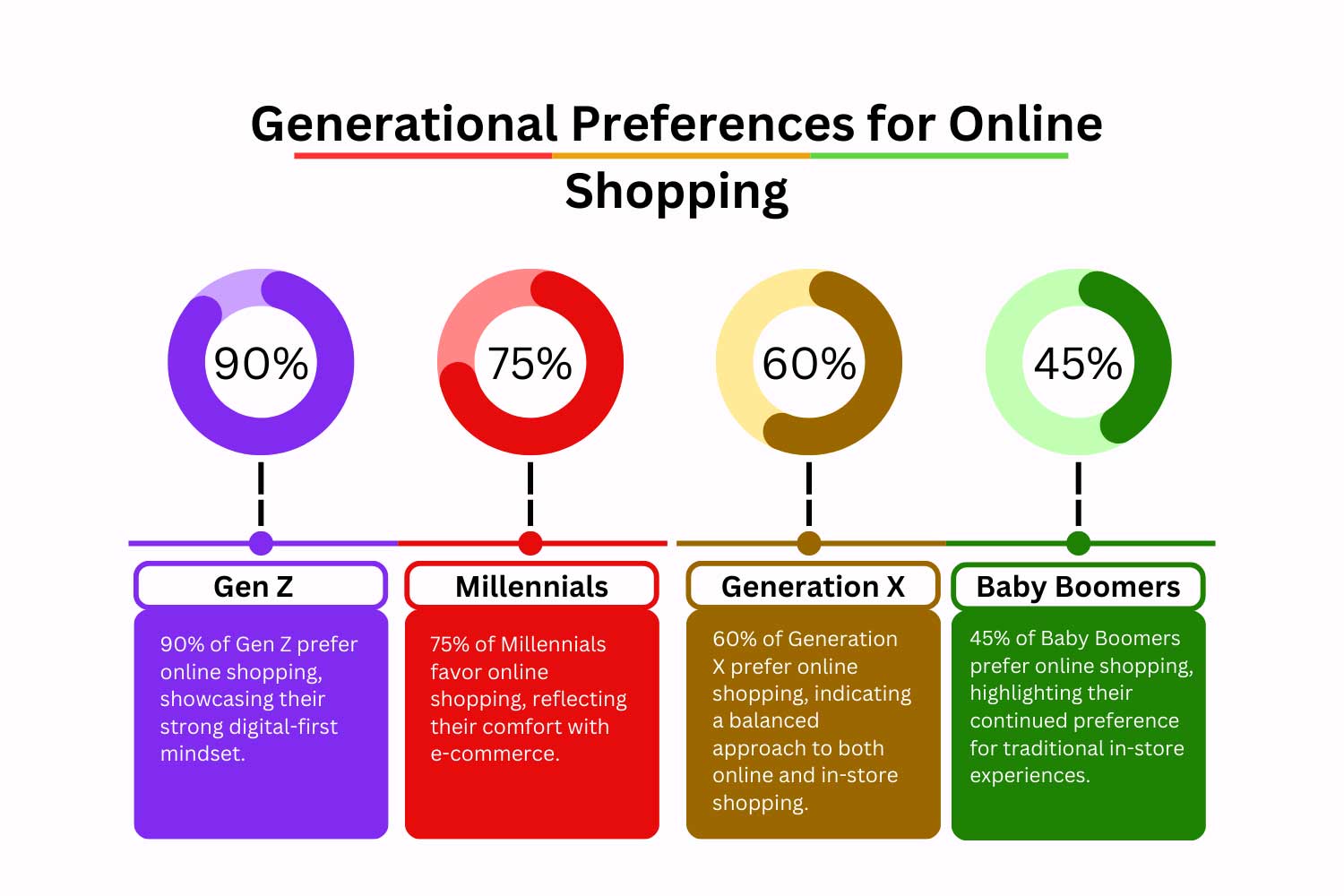
This data suggests that retailers need to adapt their strategies to cater to the evolving preferences of younger consumers while still maintaining options for older generations who may prefer traditional shopping methods.
11. 89% of U.S. consumers start their shopping experience online with product searches
This high percentage underscores the importance of digital presence for retailers. Notably, 76% of these online product searches begin on Amazon, regardless of the final purchase location.
This highlights Amazon’s dominant role as a product research platform and the need for retailers to optimize their online visibility and search engine strategies.
12. 75% of consumers use three channels or more when making a single purchase
This figure, up from 70% in 2023, demonstrates the growing prevalence of omnichannel shopping. Consumers are increasingly utilizing multiple platforms (e.g., websites, mobile apps, physical stores) during their purchase journey.
This trend emphasizes the need for retailers to provide seamless experiences across various channels to meet consumer expectations and capture sales.
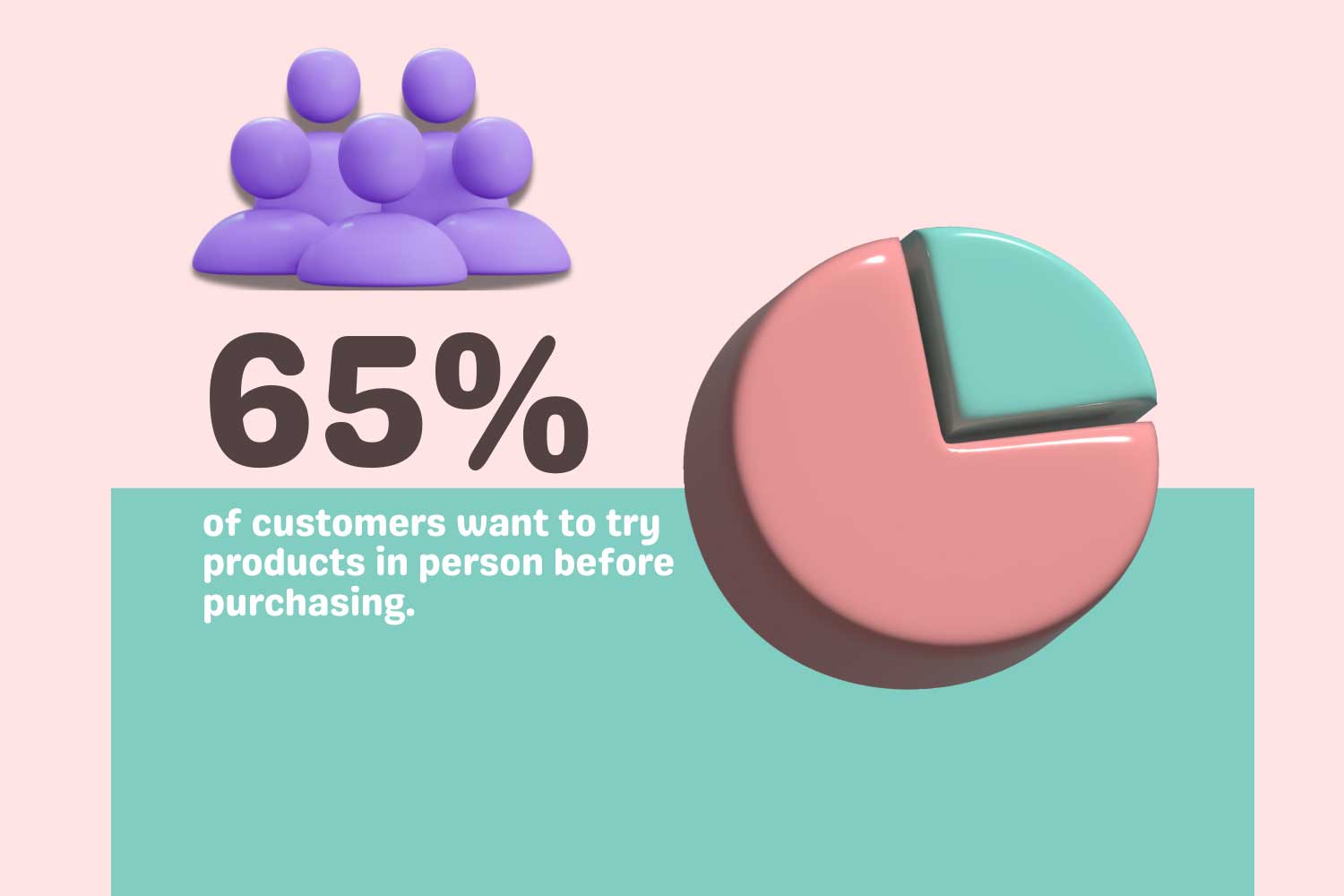
13. 65% of customers want to try products in person before purchasing
Despite the growth of online shopping, this shows that physical retail experiences remain important for many consumers.
The desire to see, touch, or try products before buying highlights the continued relevance of brick-and-mortar stores in the retail ecosystem and the value of tactile experiences in the purchasing process.
14. 58% of consumers expect a personalized discount within a day of sharing information with a retailer
This underscores the growing consumer expectation for personalization and immediate rewards. It suggests that retailers who can quickly leverage customer data to offer tailored discounts may have a competitive advantage.

This trend highlights the importance of efficient data processing and responsive marketing strategies in modern retail.
RETAIL STATISTICS BY E-COMMERCE
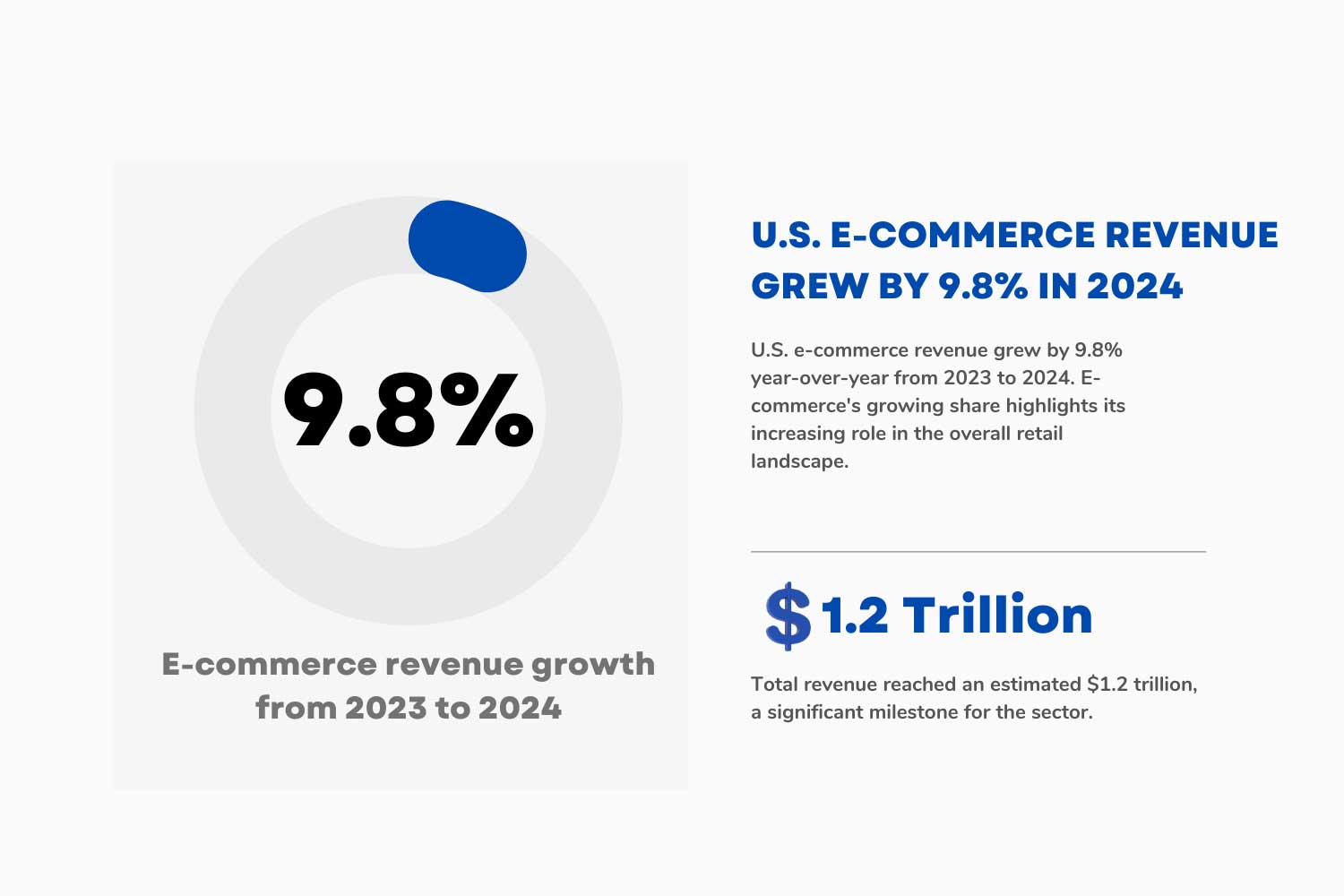
15. U.S. e-commerce revenue grew by 9.8% from 2023 to 2024, reaching approximately $1.2 trillion
This highlights the robust growth of the e-commerce sector in the United States. The 9.8% year-over-year increase demonstrates the continued shift towards online shopping.
Reaching the $1.2 trillion milestone underscores the significant role e-commerce now plays in the overall retail landscape. This growth reflects changing consumer behaviors, technological advancements, and the increasing comfort with online transactions across various demographics.
16. 8 million online retailers operating globally, with 2 million in the U.S.
This figure represents a substantial increase from the previous year, when there were 7.1 million global and 1.8 million U.S. online retailers. The growth in the number of online businesses indicates:
- Lower barriers to entry for e-commerce
- Increasing entrepreneurial interest in online retail
- The expanding digital marketplace
The fact that 25% of global online retailers are based in the U.S. highlights the country’s significant role in the global e-commerce landscape.
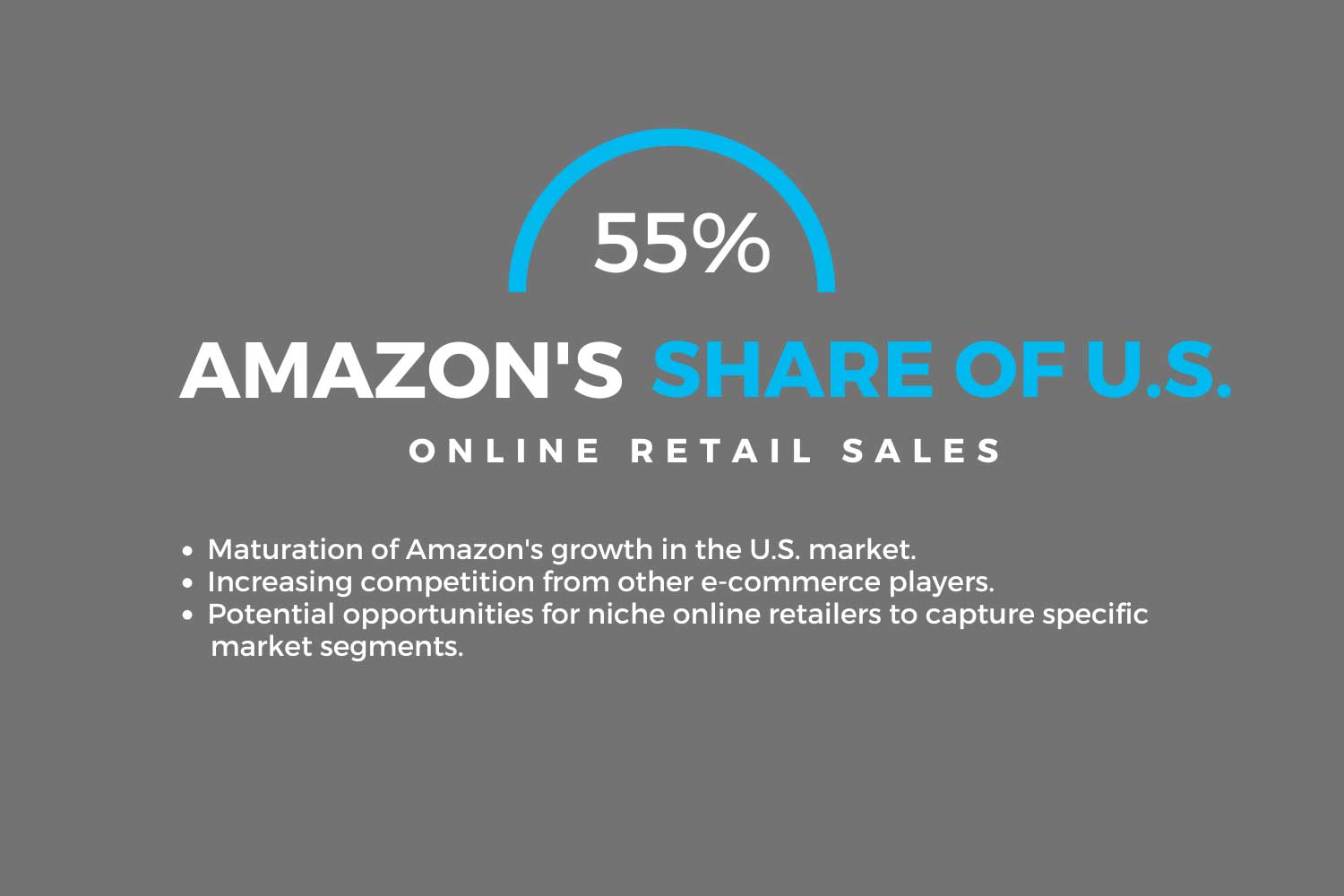
17. Amazon’s share of U.S. online retail sales has stabilized at around 55% as of 2024
This underscores Amazon’s dominant position in the U.S. e-commerce market. Controlling over half of online retail sales demonstrates Amazon’s continued influence on consumer behavior and the broader e-commerce ecosystem. The stabilization of this market share suggests:
- Maturation of Amazon’s growth in the U.S. market.
- Increasing competition from other e-commerce players.
- Potential opportunities for niche online retailers to capture specific market segments.
This is crucial for understanding the competitive landscape of U.S. e-commerce and the challenges faced by other online retailers in competing with Amazon’s extensive reach and services.
RETAIL STATISTICS BY TRENDS
18. 75% of U.S. consumers now use BOPIS (buy online pickup in-store)
This is up from 68% in 2022, highlights the growing popularity of the BOPIS model. This trend reflects:
- Consumers’ desire for convenience and flexibility in their shopping experiences.
- The successful integration of online and offline retail channels.
- Retailers’ adaptation to changing consumer preferences.
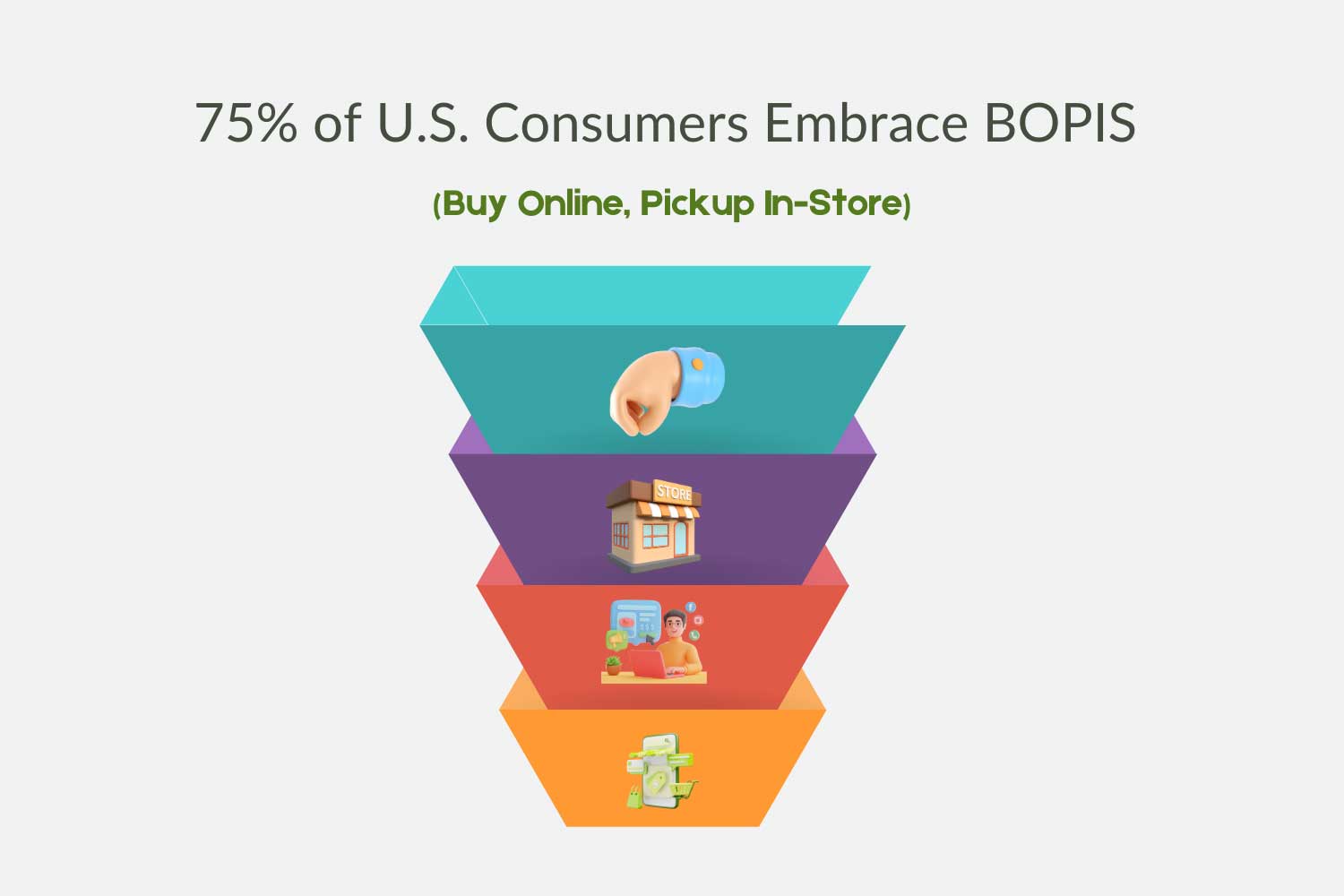
The increase in BOPIS adoption demonstrates how retailers are effectively blending digital and physical shopping experiences to meet customer needs.
19. 55% of retailers offer curbside pickup in 2024
The continued rise in retailers offering curbside pickup services indicates:
- Ongoing adaptation to consumer preferences for convenience and contactless options
- Retailers’ efforts to compete with pure e-commerce players by leveraging their physical locations
- The lasting impact of pandemic-era innovations on retail operations
This trend shows how brick-and-mortar retailers are evolving to provide more flexible shopping options, bridging the gap between online and in-store experiences.
20. The U.S. e-commerce market is expected to experience a CAGR of 14% between 2024 and 2028
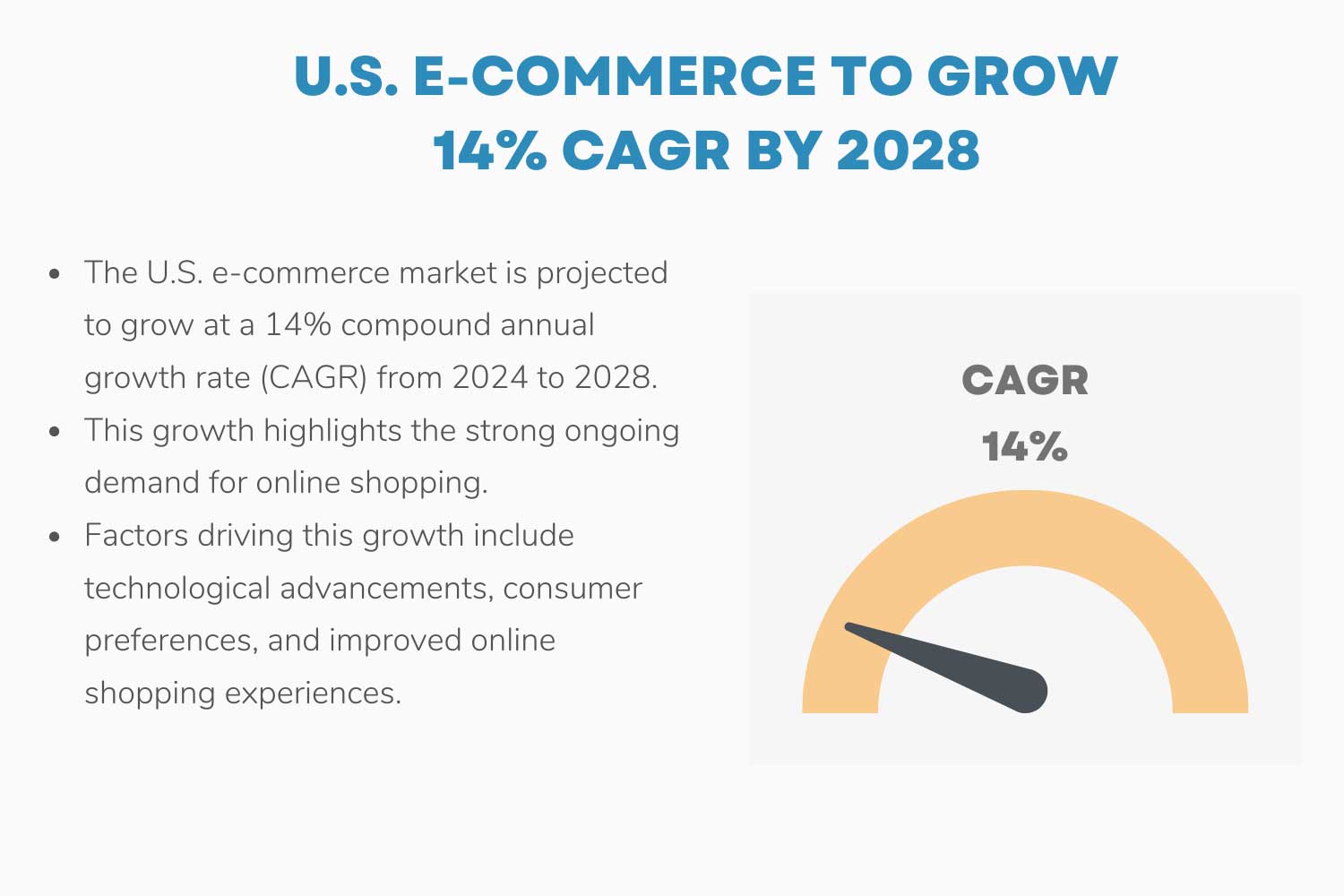
This projected Compound Annual Growth Rate (CAGR) of 14% for the U.S. e-commerce market indicates:
- Continued strong growth in online retail
- Ongoing shift in consumer shopping habits towards digital channels
- Potential for significant expansion in e-commerce infrastructure and technologies
The expectation of even higher growth rates in the fashion and food & personal care industries suggests:
- Increasing consumer comfort with buying these traditionally “high-touch” items online
- Potential for innovation in areas like virtual try-ons and fresh food delivery
- Opportunities for retailers to capture market share in these rapidly growing segments
This forecast underscores the importance for retailers to continue investing in their e-commerce capabilities and to adapt their strategies to capitalize on this expected growth.
CONCLUSION
The retail industry in the United States continues to evolve and grow. As of 2024, there are over 1,050,000 brick-and-mortar retail establishments and 2 million online retailers nationwide.
While e-commerce continues to gain market share, physical stores remain resilient, accounting for 85% of all sales. The COVID-19 pandemic has accelerated certain trends, such as the adoption of BOPIS and curbside pickup, but it hasn’t fundamentally altered the importance of in-person shopping experiences.
From 2010 to 2023, the U.S. retail annual growth rate increased from 5.63% to over 20%, demonstrating the industry’s strength and adaptability. As we move further into 2024 and beyond, the retail industry is poised for continued growth and innovation, driven by evolving consumer preferences and technological advancements.
REFERENCES
- Statista. “E-commerce as a share of total U.S. retail sales from 1st quarter 2010 to 3rd quarter 2021.“
- Marketplace Pulse. “U.S. Total Retail Growth Rate.“
- NFR. “Retail Sales to Now Exceed $4.44 Trillion in 2021, as NRF Revises Annual Forecast.“
- CareerOneStop. “Industries with Largest Employment.“
- Cision. “28% of Small Businesses Don’t Have a Website, According to New Survey Data.“
- NFR. “Top 100 Retailers 2021 List.“
- Mood Media. “Shopper Sentiments.“
- Statista. “Online shopping preference in the United States as of 2017, by age group.“
- CSA. “Study: Most product searches begin on Amazon.”
- Business News Daily. “Shoppers Still Prefer In-Store Over Online Shopping.“
- Insider. “Shoppers expect more personalization.”
- Statista. “Retail e-commerce revenue in the United States from 2017 to 2025.“
- Digital Intheround. “How Many Online Stores Are There in 2021?“
- Statista. “Projected retail e-commerce GMV share of Amazon in the United States from 2016 to 2021.“
- Insider. “Almost 70% of U.S. consumers use BOPIS.”
- HBR. “How “Buy Online, Pick Up In-Store” Gives Retailers an Edge.“
- Statista. “Retail e-commerce sales CAGR in the United States from 2017 to 2025, by product category.“