Did you know that Apple’s wearables, home, and accessories segment, which includes AirPods, generated over $41 billion in revenue?
These popular wireless earbuds have become a must-have accessory for many.
But despite their popularity and high price tag, AirPods have one major weakness: they don’t mix well with water.
If you’ve accidentally dropped your AirPods in water, you might be wondering how to save them.
You’ve probably heard about the rice trick for drying out wet electronics. But when it comes to AirPods, this method isn’t as effective as you might think.
So, what should you do if your AirPods take an unexpected swim? Don’t worry. There are better ways to dry them out and get them working again.
In this article, you’ll learn about practical and effective methods to rescue your wet AirPods.
We’ll guide you through the steps to help you get back to enjoying your favorite music as soon as possible.
Does leaving your AirPods in rice help?
You might have heard that rice can save wet electronics, but when it comes to your AirPods, it’s not the best solution.
AirPods are designed to be water-resistant, with an IPX4 rating. This means they can handle some sweat and light splashes.
But if they’ve been fully submerged or gone through the washing machine, you need a different approach.
While rice might work for some devices, it’s not ideal for AirPods. There are two main reasons for this:
- Rice isn’t guaranteed to remove all the moisture from your AirPods.
- Tiny grains of rice can get stuck in your AirPods’ small openings, potentially causing more problems.
These rice particles can block important parts of your AirPods or even cause them to overheat.
So, if rice isn’t the answer, what should you do?
How to dry out your wet AirPods
If your AirPods have taken an unexpected swim, don’t panic. Here are three effective methods to dry them out.
If needed, you can also learn how to clean your AirPods properly to prevent any damage. Here are three effective methods to dry them out:
Method 1: Use a microfiber cloth
The simplest and quickest way to dry your AirPods is with a microfiber cloth. Here’s what you should do:
- Grab a microfiber cloth as soon as your AirPods get wet.
- Gently pat your AirPods dry. Don’t rub or press too hard.
- Be careful not to push water further inside.
This method is actually recommended by Apple. It’s easy and effective, but remember to be gentle.
Method 2: Use Siri to remove water (for AirPods Pro)
If you have AirPods Pro, you can use a neat trick to eject water:
- Remove the silicone tips from your AirPods Pro.
- Connect your AirPods to your iPhone.
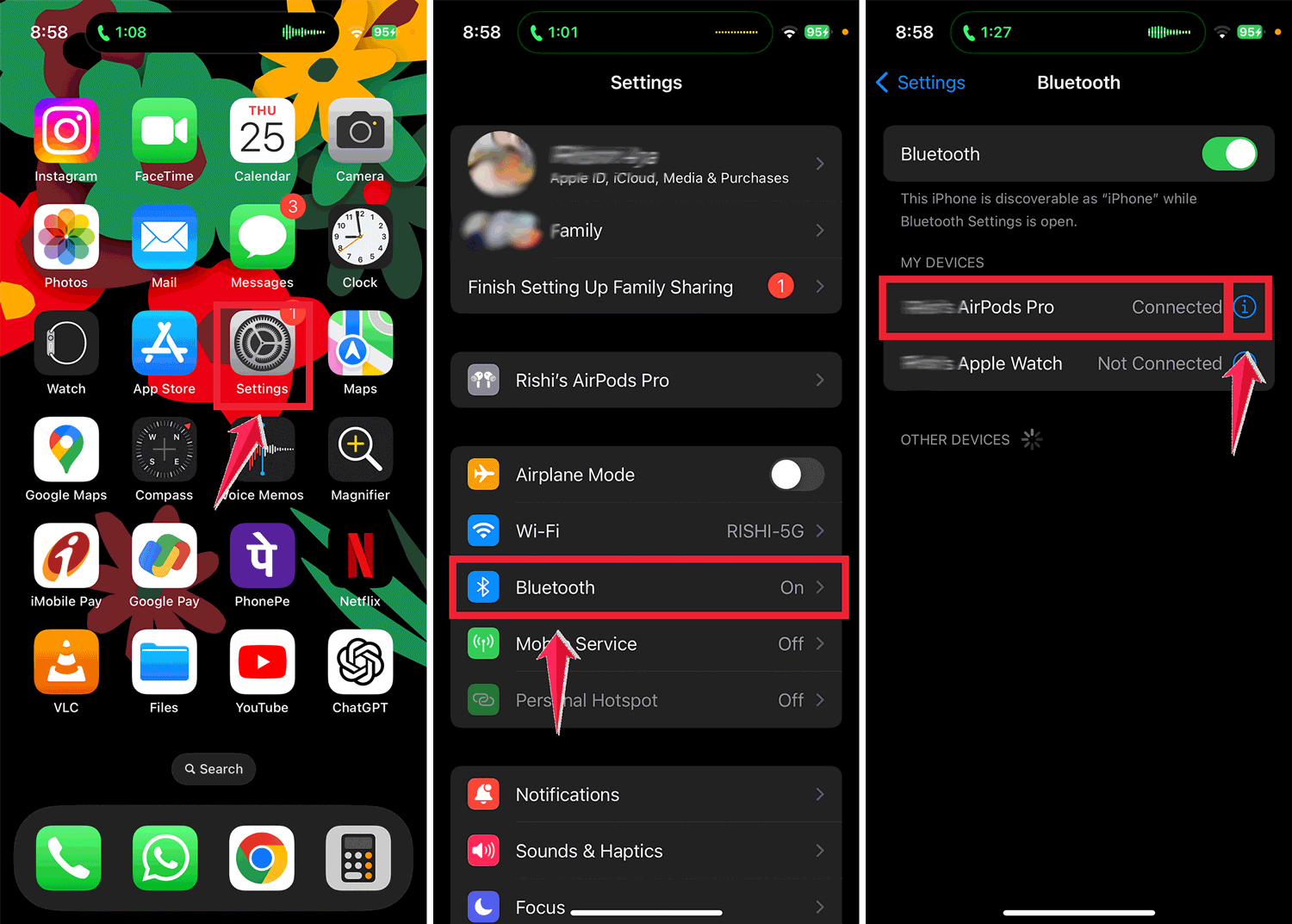
- Go to Settings > Bluetooth > Find your AirPods > Tap the ‘i‘ next to them.
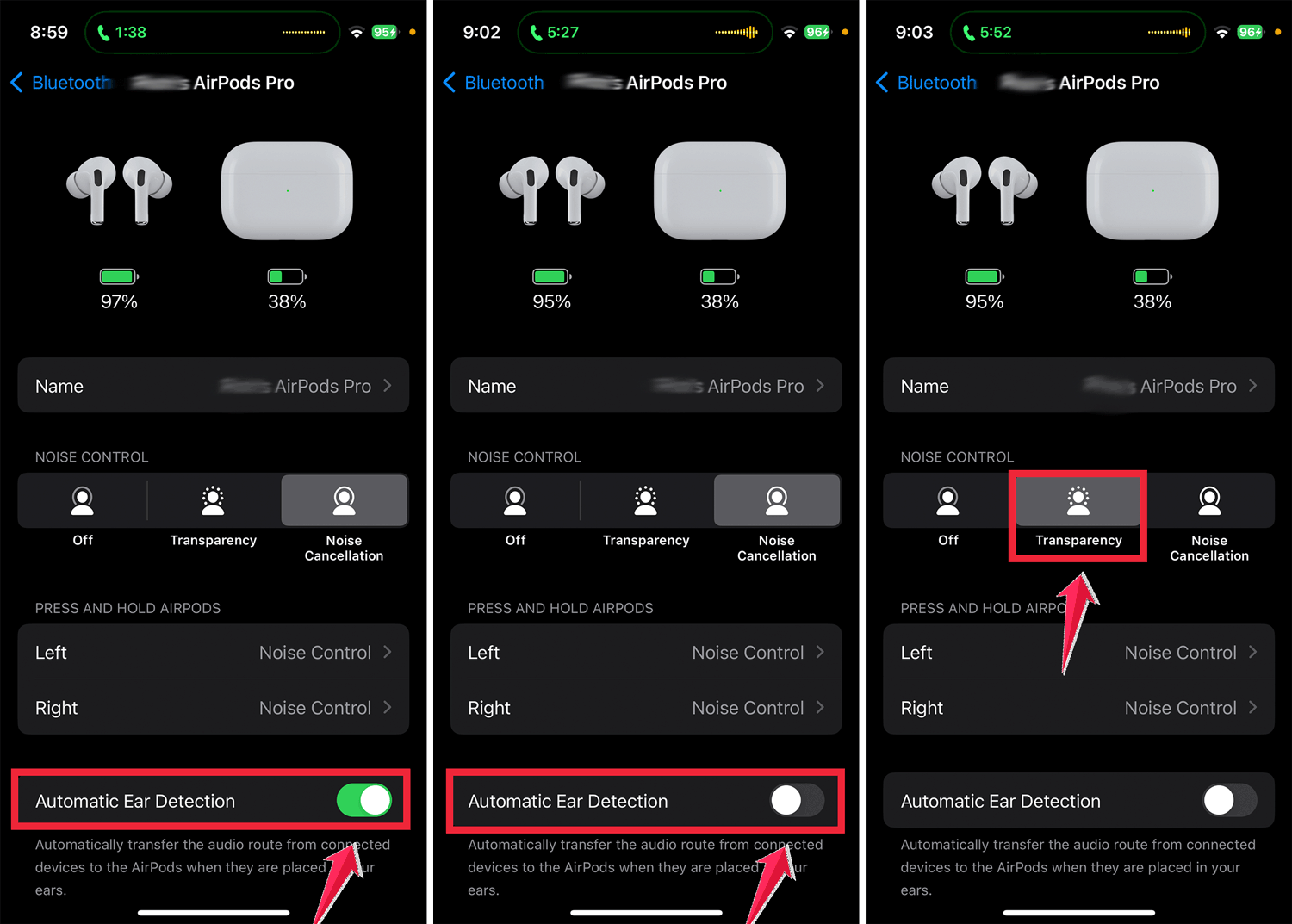
- Turn off “Automatic Ear Detection” and switch to “Transparency Mode.”
- Use Siri to start the water ejection:
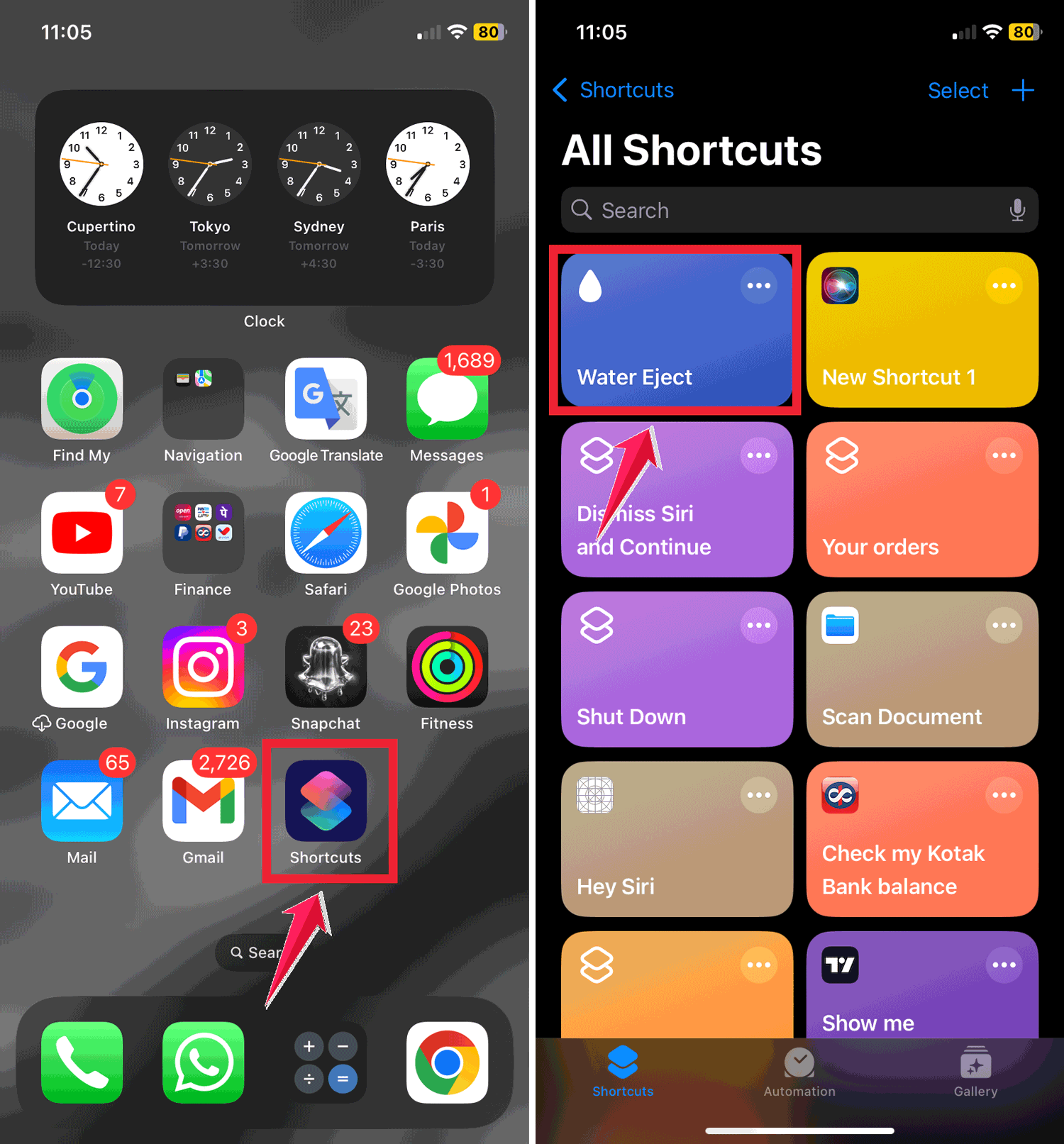
- Open the Siri shortcuts app on your iPhone.
- Add the “Water Eject” shortcut.
- Go to the “Shortcuts” tab and select “Water Eject.”
- When you click on the “Water Eject” option.
-
- A new option window will open, click on “Start“.
- Now, select intensity levels from 1, 2, and 3.
- As soon as you select your intensity level, the process will begin.
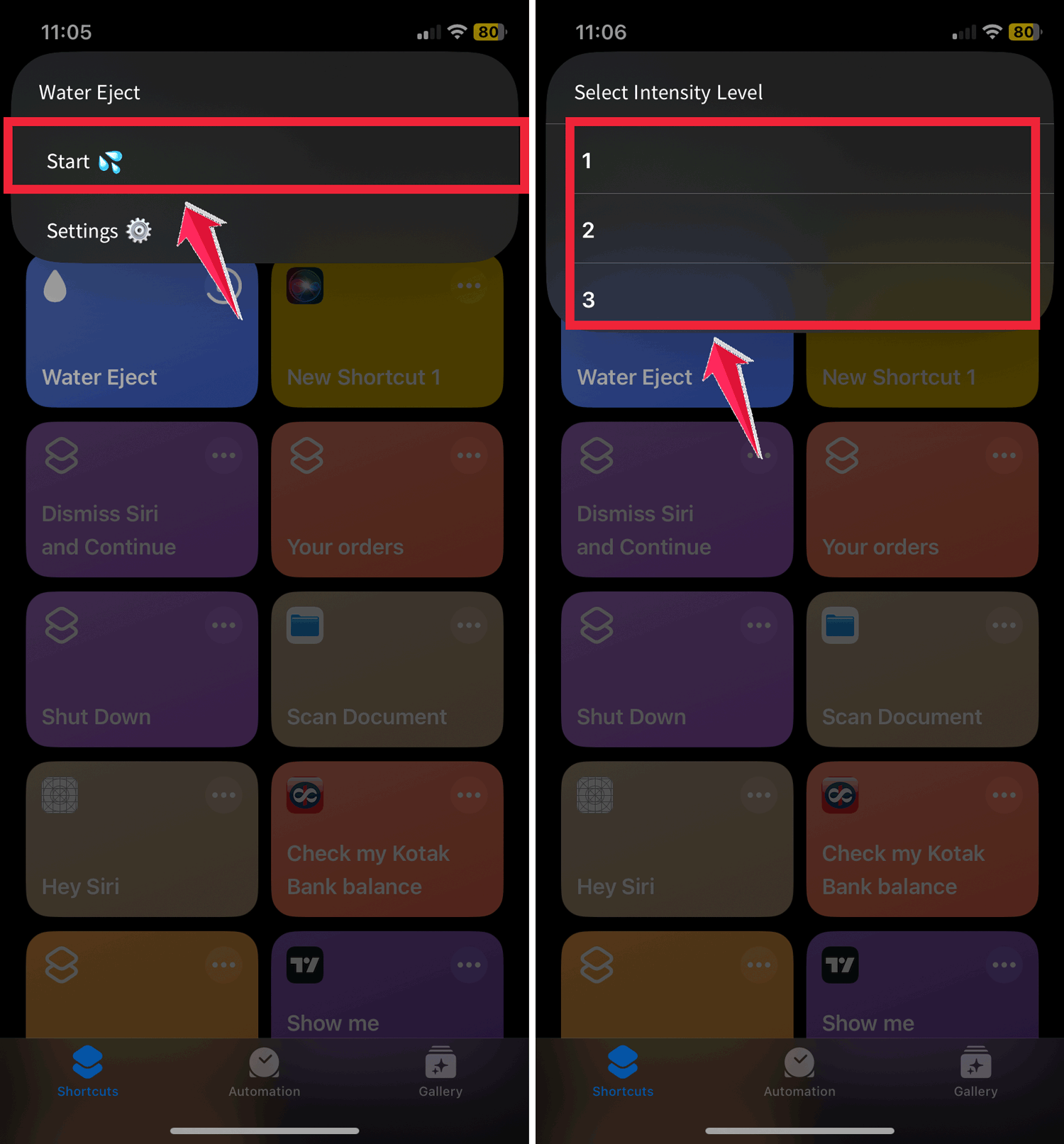
Your AirPods will play a sound for about 12 seconds to push out water.
Don’t wear your AirPods during this process, as the sound could be harmful to your ears.
Method 3: Use desiccant packets
Those little “Do Not Eat” packets you find in shoe boxes can help dry your AirPods:
- Collect a few desiccant packets.
- Place your damp AirPods in a container or resealable bag.
- Add the desiccant packets to the container.
- Seal it and wait for a few hours.
After a few hours, check if your AirPods are dry. Then, connect them to your iPhone and test them.
Listen for any unusual sounds that might indicate remaining moisture or damage. If you encounter sound issues, here’s how you can fix AirPods with sound issues.
Remember, patience is key when drying out your AirPods. Give each method enough time to work effectively.
If you’re still having issues after trying these methods, it might be time to contact Apple Support for further assistance.
The takeaway
Wet AirPods can be a real headache, but you don’t need to panic. While the rice method is popular, it’s not the best solution for your high-tech earbuds.
Instead, you now have some safer and more effective ways to dry them out.
Remember, a gentle touch with a microfiber cloth is your first line of defense.
For AirPods Pro users, the Siri water ejection trick can be a game-changer.
And don’t forget about those handy desiccant packets. They’re not just for keeping your shoes dry!
The most important thing to keep in mind is to act quickly but gently when your AirPods get wet.
Avoid using heat or forcing water out, as this can cause more damage. If you notice strange sounds like chirping, it’s helpful to understand why AirPods might chirp after getting wet.
With the right approach, you can often save your AirPods from a watery fate and get back to enjoying your music.
We hope you found this guide helpful. If you have any experiences with drying out wet AirPods, feel free to share in the comments below!